|
Part family |
Max Ø |
Max length |
Batch |
Recommended model |
Why |
|
Long steel shafts / rods |
200 mm |
1,000 mm |
Low–Mid |
ALCK6150X1000 (flat bed) |
Stable bed, 1,000 mm centers |
|
General turned parts (Al/Steel) |
400 mm |
750 mm |
Mid |
80 mm bore, versatile |
|
|
Small precision parts |
360 mm |
500 mm |
Mid–High |
ALTCK36A (slant) |
Fast cycle, clean chips |
|
Turned + milled features |
520 mm |
750 mm |
Mid–High |
Live tooling, one chuck |
|
|
Oil-country tubular threads |
220 mm (tube) |
— |
Mid |
ALQK1322 (pipe threading) |
Dedicated thread geometry |
|
Prismatic / box parts |
650–850 mm |
— |
Any |
Not a lathe job — use a VMC |
INDUSTRY NEWS
How to Choose a CNC Lathe: The 2026 Buyer's Guide for Job Shops & Manufacturers
Choosing the wrong CNC lathe can quietly drain your shop for years — wrong tolerances, slow cycles, a machine that can't grow. Before you sign a purchase order, learn how to choose a CNC lathe that matches your parts, floor, and budget.
We have built and supported CNC lathes for 30+ years, shipped 1,000+ machines to 80+ countries, and seen the same buying mistakes repeat. We wrote this the way we'd explain it on the factory floor — with numbers, not adjectives.
Here is the 7-step process we walk every customer through:
- Define the part first. Capture max turning diameter, max length, material, required tolerance, and batch size before you look at any machine.
- Pick the bed structure. Flat bed for long shafts and heavy roughing; slant bed (30°–45°) for speed, chip flow, and faster cycle times
- Lock the six specs that matter. Spindle power, speed, torque, and bore; turret stations; linear rail vs box way; positioning accuracy and repeatability; live-tooling needs; chuck and tailstock.
- Decide lathe vs machining center. Round, revolved parts → lathe; prismatic boxes → VMC; mixed features → turning-milling.
- Choose a control system your operators can run. Fanuc, Siemens, or GSK/KND — matched to skill level and CAM output.
- Plan automation up front. Bar feeder, hydraulic chuck, auto door, chip conveyor, and a robot or gantry interface sized to your volume.
- Build a 5-year TCO and vet the supplier. Freight, duty, install, tooling, maintenance, residual value — then verify the factory, certs, and references.
If you already have a part drawing, send it to our engineers on WhatsApp for a free configuration check — we will tell you in plain terms which spec band fits, with no sales pressure.
Key Takeaways
- Always spec the machine to the part, not the other way around — diameter, length, material, and tolerance decide everything downstream.
- Flat-bed lathes (e.g. ALCK6140X750, 80 mm bore) suit long shafts and heavy cuts; slant-bed units (30°–45°) win on cycle time and chip evacuation.
- The six specs that actually drive results: spindle bore ≥65 mm, speed matched to material (aluminum 6,000+ rpm, steel 3,000–4,000 rpm), turret stations, way type, accuracy, and live tooling.
- A 2026 Chinese flat-bed CNC lathe runs an ex-works range of
5,500–22,000; slant-bed units from39,000 and turning-milling (Y-axis)46,000–$69,000 — versus €150k new / €75k used-5-yr in Western Europe. - Vet the supplier with 8 documents (spec sheet, CE/ISO, audit video, warranty, spare-parts list, references) and build a 5-year TCO before you commit.
1. Start With the Part, Not the Machine
The single biggest cause of a bad CNC lathe purchase is falling in love with a machine before understanding the part. Every number that matters later — spindle bore, bed length, turret size, control choice — traces back to the geometry and volume of what you actually cut.
Diameter, Length, and Material
Start with the three hard limits. Max turning diameter sets your chuck and swing; max length between centers sets your bed; material sets your spindle power and speed.
As a rule of thumb: if your longest part exceeds 500 mm, plan a bed at least 1.5× that length for the tailstock and steady rest. The ALCK6150X1000, for instance, gives 1,000 mm between centers on a 500 mm swing — enough for shafts up to 200 mm.
Tolerance and Surface Finish
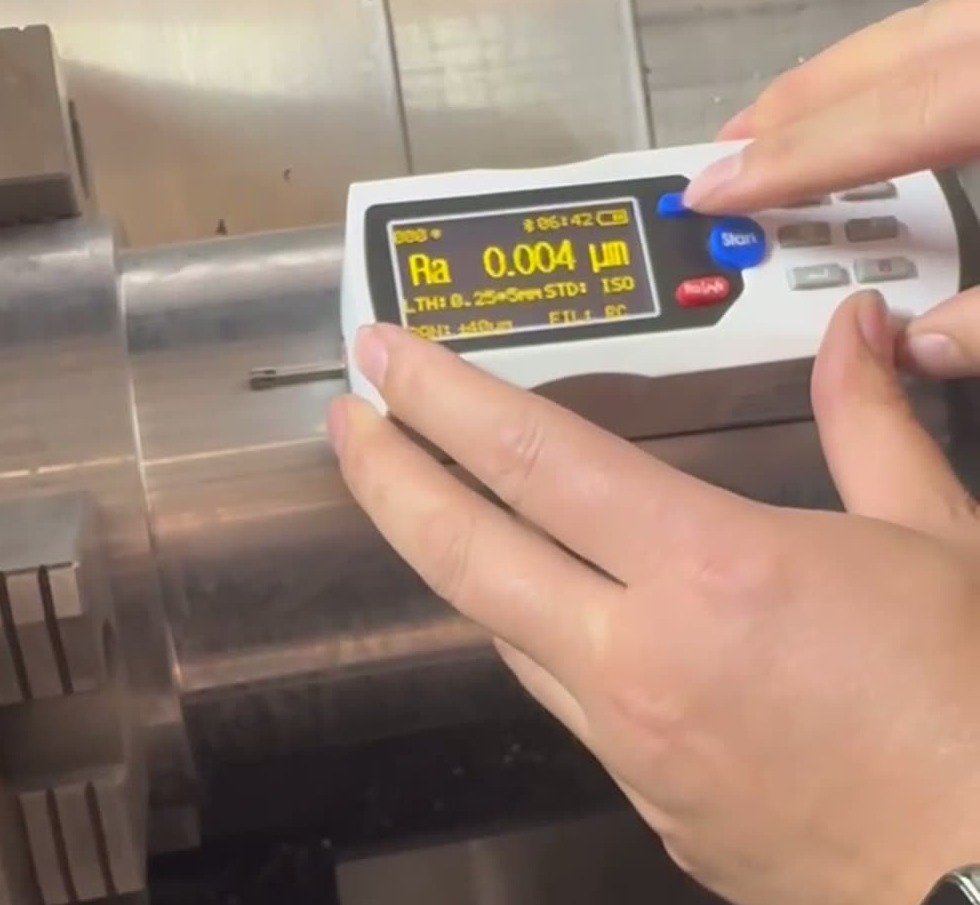
Tolerance decides the accuracy class. A job holding ±0.05 mm runs on an entry lathe; ±0.01 mm or better pushes you toward a slant bed with linear guides. Surface finish (Ra) drives spindle stability and tooling.
Write down the tightest tolerance your pipeline will need over the next 24 months, not just today's work.
Batch Size: Three Tiers
|
Batch profile |
Volume per run |
What it demands |
Example fit |
|
Prototype / jobbing |
1–50 pcs |
Fast setup, flexible tooling, manual load OK |
|
|
Serial production |
50–2,000 pcs |
Hydraulic chuck, bar feeder, auto door |
|
|
High-volume cell |
2,000+ pcs |
Robot/gantry, twin spindle, turning-milling |
The tier you sit in changes your automation budget more than any other factor.
2. Flat Bed vs Slant Bed: Which Structure Fits Your Work
This is the question every buyer asks first — and the one most often answered with a slogan instead of a number. Both cut metal; they differ in rigidity, chip handling, and drift under load.
Flat-Bed CNC Lathes
A flat-bed lathe (ALCK0640, ALCK6136X750, ALCK6140X750, ALCK6150X1000) puts the rails on a horizontal plane. The advantage is stability for long, heavy work. With the part supported close to the base, long shafts up to 1,000 mm between centers stay straight, and heavy roughing cuts don't fight gravity. The ALCK6140X750, for example, ships with an 80 mm spindle bore standard — generous for bar and shaft work.
The trade-off: chips sit on the bed and need clearing, and loading is slightly slower. For varied, longer parts, that is a fine trade.
Slant-Bed CNC Lathes (30° / 45°)
A slant-bed lathe (ALTCK36A, ALTCK52DY) angles the bed 30°–45°. Chips fall away by gravity — less recutting, better finish, faster cycles, turret closer to the spindle.
For high-mix or high-volume round parts, the slant bed usually pays for the price gap in throughput alone.
Accuracy Decay: A Real Comparison
Here is the number competitors skip. In side-by-side tracking over two shifts, slant-bed machines held drift in the 0.003–0.006 mm band over six months, while flat-bed units drifted 0.01–0.018 mm before re-leveling (representative ranges, not a lab cert).
Illustrative example: A European automotive job shop running brake components moved from a flat-bed to an ALTCK36A slant bed. They reported the per-part cycle dropped enough to add a second shift's worth of capacity on the same floor footprint, and recutting from chip nests on the bed essentially disappeared. We present this as a typical pattern, not a guaranteed figure — your parts will differ.
Bottom line: long shafts and heavy roughing → flat bed; speed, finish, and throughput → slant bed.
3. The 6 Specs That Actually Matter
Once the bed is chosen, six specifications decide whether the machine earns its floor space — each pinned to a number you can measure on the floor.
Spindle Power, Speed, Torque, and Bore
- Power: 5.5–7.5 kW for entry aluminum/steel; 11–15 kW for serious steel roughing.
- Speed: aluminum wants 6,000+ rpm; carbon steel runs best at 3,000–4,000 rpm. Match the spindle to your dominant material, not the brochure top speed.
- Torque: check the torque curve at your cutting rpm, not just the peak.
- Bore (through-hole): insist on ≥65 mm if you feed bar or turn tubular parts. The ALCK6140X750's 80 mm bore is a good benchmark for general job-shop bar work.
Turret Stations
- 8–12 stations: entry jobbing, a handful of tools per part.
- 12–24 stations: mixed work, multiple setups in one chuck.
- 40+ (multi-turret / twin-turret): high complexity, minimal setup changeover.
Linear Rail vs Box Way
Linear guides (most slant beds) give speed and repeatability for finishing; box ways (larger flat beds) absorb heavy roughing without deflection.
Positioning Accuracy and Repeatability
Look for positioning accuracy ≤0.01 mm and repeatability ≤0.005 mm on a credible spec sheet, verified by laser interferometer at the factory. Ask to see the test report — a number on paper without the traceable report is just a wish.
C-Axis, Y-Axis, Live Tooling, Sub-Spindle: The Capability Ladder
|
Capability |
What it adds |
When you need it |
|
C-axis (indexed/cont.) |
Off-center drilled / milled features |
Hex, flats, cross-holes |
|
Live tooling (Y optional) |
Milling in the lathe |
Complex turned parts |
|
Y-axis |
True off-center milling |
Eccentric features |
|
Sub-spindle |
Done-in-one, both ends |
No second op, faster cell |
The ALTCK52DY and ALFCK52-750 turning-milling centers sit at the top of this ladder — milling and turning in one chuck.
Tailstock, Steady Rest, and Chuck
Don't forget the supports. A hydraulic tailstock stabilizes long shafts; a steady rest kills vibration on slender parts; chuck size (6" / 8" / 10") must clear your max diameter. Spec these with the part.
4. Lathe or Machining Center?
A common, expensive mistake is buying a lathe for a part that is mostly not round.
Revolved Parts → Lathe; Boxes → VMC
If the dominant feature is a centerline of revolution (shafts, bushings, fittings, threaded bodies), a CNC lathe is faster and cheaper per part. If the part is prismatic — a bracket, a housing, a plate with holes off-center — a vertical machining center is the right tool.
Our VMC line (VMC650, ALVMC850, ALVMC1160, ALVMC1370) covers table travels from 650 mm up to 1,370 mm, with 11–15 kW spindles and 24–30 tool magazines for exactly this work.
When Turning-Milling Pays for Itself
When a part is mostly round but needs a few milled flats or cross-holes, a turning-milling center (ALFCK52-750) finishes it in one chuck. Rule of thumb: if a part needs more than two setups across a lathe and a VMC, consolidate into a turning-milling center to win on labor and accuracy. See our machining center comparison guide.
5. Choosing the Control System
The control is the machine your operator actually touches every day. A great lathe with a control nobody can run is a paperweight.
Fanuc vs Siemens vs GSK / KND
|
Control |
Upfront cost |
Learning curve |
Service reach |
CAM friendliness |
|
Fanuc |
High |
Medium |
Global, deep |
Excellent |
|
Siemens |
High |
Steeper |
Strong (EU/APAC) |
Excellent (ShopMill) |
|
GSK / KND |
Low–Mid |
Easy (Chinese UI) |
Strong in Asia, growing |
Good with post-processors |
Budget matters: a Fanuc or Siemens control can add 4,000–10,000 versus a GSK/KND option (our own price lists show roughly +$10k for a Fanuc retrofit on a mid lathe). GSK or KND delivers 90% of the capability at a fraction of the cost — and our engineers remote-support both.
The Operator-Skill Reality
Be honest about who will run it. Experienced floors exporting to OEMs demanding Fanuc should buy Fanuc. Training new operators on domestic jobbing work? A GSK/KND control gets them productive in days. Match the control to the people, not the prestige.
6. Plan Automation Before You Buy
Automation decided after delivery costs 2–3× more than automation designed in from day one — the base, chip conveyor mounts, and door actuator points must exist before you add a robot.
Build the automation layer in this order:
- Hydraulic chuck — faster, safer clamping than manual, step one for any serial work.
- Bar feeder — turns an attended lathe into lights-out production for bar stock.
- Automatic door — required before any loader can touch the machine.
- Chip conveyor — non-negotiable for unattended runs; chips stall a cell fast.
- Parts catcher / conveyor — separates good parts from the mess.
- Robot or gantry interface — only after the above; confirm the lathe exposes I/O and a handshake protocol.
Illustrative example: A fastener maker added a bar feeder and auto door to an ALTCK36A and moved from one operator running three machines attended, to one operator supervising a cell of six running partly unattended. The payback on the automation kit landed inside the first year — a pattern we see often, though your math depends on labor cost and volume.
7. What a CNC Lathe Really Costs in 2026
This is where most guides stay vague. Let's put numbers on the table — ranges are typical ex-works USD and vary by configuration; confirm the live quote with your supplier. Figures below are drawn from our current factory price lists (Shandong Anle flat-bed & pipe-thread lists, VMC promo list), quoted ex-works in USD, excluding ocean freight, crating, and packaging.
Chinese New-Machine Price Bands by Type
|
Machine type |
Example model |
Typical ex-works range (USD) |
Basis |
|
Flat-bed, small (≤48 mm bore) |
ALCK0640 |
$5,500–$12,000 |
CK0640 base ≈ $5.5k, optioned to ~$12k |
|
Flat-bed, mid (52–82 mm bore) |
ALCK6140X750 / ALCK6150X1000 |
$9,600–$22,000 | KND ≈ $9.6–13.9k; Fanuc retrofit +~$10k |
|
Slant-bed, 30°–45° |
ALTCK52 (ALTCK36A smaller entry) |
$39,000–$46,000 | ALTCK52 listed $39k base, Fanuc/Siemens +$7k; entry ALTCK36A lower (est. ~$13–28k) |
|
Turning-milling (Y-axis) |
ALTCK52DY / ALFCK52-750 |
$46,000–$69,000 | ALTCK52D $46k; ALTCK52DY $57k; ALTCK600DY $69k |
|
Pipe threading lathe |
ALQK1322 |
$27,900–$30,000 | QK1322 KND ≈ $27.9k, bus-version $29.4k |
|
Vertical machining center |
VMC650 / ALVMC850 |
$18,200–$48,900 | GSK ≈ $18.2–38k; 4-axis Fanuc to ~$48.9k |
Currency and Incoterms: all figures are USD, ex-works (excluding freight/packaging). Switch to FOB by adding port handling; CIF adds ocean freight + insurance to your destination. Control choice moves the number the most — a Fanuc/Siemens control typically adds $10k–$12k over a GSK/KND equivalent.
New vs Used in Western Europe
For perspective, wesellmachines lists a comparable new European lathe around €150,000, while a 5-year-old used unit runs about €75,000. The used unit saves cash up front but carries unknown wear, weaker support, and no warranty. A new Chinese lathe at a fraction of the European new price closes the gap fast once capability is added.
The 5-Year TCO
Purchase price is maybe half the story. Build the real cost:
- Machine: the ex-works price above.
- Ocean freight: ~
1,500–4,000 per 20 ft container; larger units3,000–8,000. - Import duty + VAT: by country (US HTS 8458 often 0–4.9%; EU ~0–3.7% + local VAT).
- Installation & commissioning:
1,000–5,000. - First tooling load:
2,000–10,000. - Annual maintenance: ~3–6% of machine value.
- Residual value: a well-kept new lathe retains ~30–45% at 5 years.
A Simple ROI Calculation
Payback (years) = Machine investment ÷ (Savings per part × Annual volume − Annual ownership cost)
Illustrative example: Moving outsourced turning in-house on an ALCK6140X750 at ~1.20 saved per part, 60,000 parts/year, minus ~6,000 ownership, the $14,000 machine pays back in ~0.2 years — then pure margin. Your numbers differ; the method matters.
Ready to see real numbers for your parts? Get a Free Quote from our engineers, or message us on WhatsApp for a tailored 5-year cost model.
8. Buying From a Chinese CNC Lathe Manufacturer: The Complete Process
"Will a Chinese-built CNC lathe actually hold tolerance?" — that's the email we get three or four times a week from shop owners who've been burned before. Here's the straight answer we give them.
Is a Chinese CNC Lathe Good Quality?
A 9,000 lathe from a sloppy plant and a 22,000 one from a disciplined one can swap places on quality — the difference isn't the country, it's the five checks below. A serious manufacturer controls quality at five points:
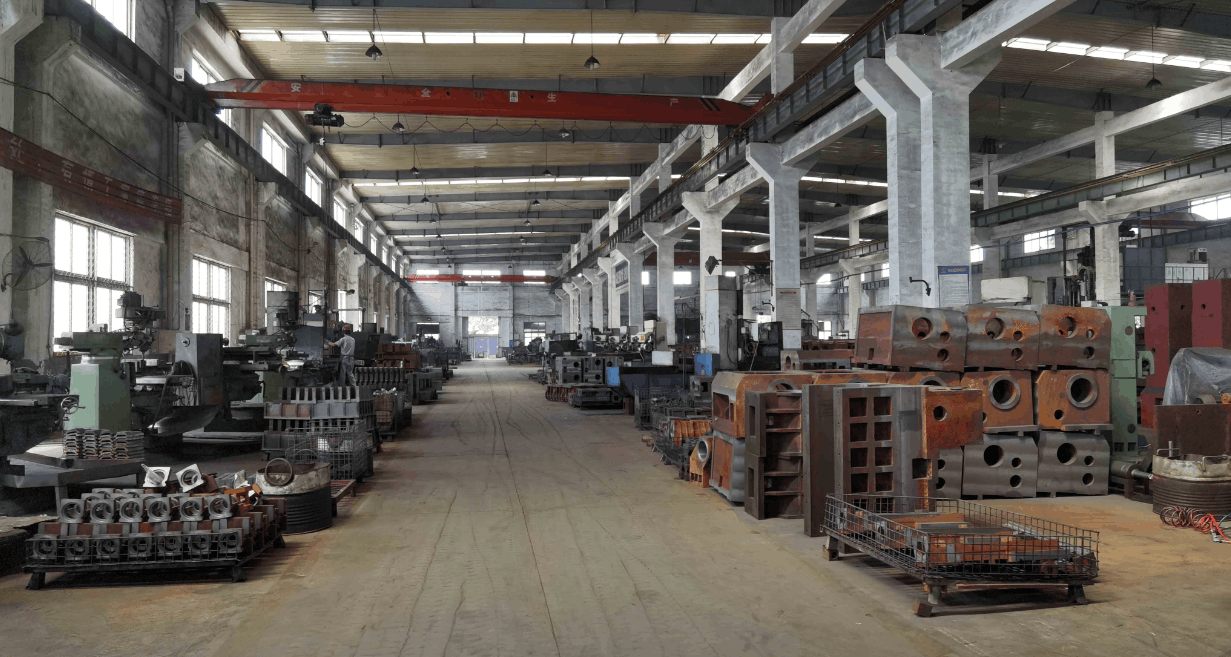
- Castings: stress-relieved cast-iron beds that don't warp within six months.
- Guideways: named brands (HIWIN/PMI, THK), not no-name rails.
- Ball screws: precision-ground from reputable suppliers, pre-tensioned.
- Assembly: constant-temperature workshops so bearing fits don't drift by afternoon.
- Inspection: laser interferometer accuracy tests and a run-off before shipping.
A shop that does all five ships a lathe that holds spec for years. One that skips them ships trouble.
[Assembly photo: spindle and turret alignment in a temperature-controlled bay]
How to Vet a Supplier
Don't buy from a logo. Verify the entity with five checks:
- Factory vs trader: live video tour of their plant, not a shared showroom.
- Certifications: ISO 9001 and CE at minimum (see ISO 23125:2015 for turning-machine safety and the EU CE marking guide).
- Annual output: hundreds of units a year, not dozens.
- Export countries: we export to 80+ — broad history means proven customs compliance.
- Factory audit: a third-party audit (SGS/TÜV) removes doubt.
FOB vs CIF, Ocean Freight, and Customs
Understand trade terms before you negotiate. FOB: machine on the ship at the Chinese port; you handle freight and import. CIF adds freight and insurance to your destination. For most buyers, FOB + your own forwarder is cheaper and more controllable. Budget duty and VAT per your HTS code.
Installation, Training, and Remote Support
A credible supplier commissions the machine remotely, trains your team on video, and ships a commissioning checklist — our team does exactly this.
Spare Parts and Cross-Border Warranty
Confirm the spare-parts list with prices and a realistic warranty (typically 12 months, wear items excluded). We stock common spares for express delivery, so a downed lathe is a days-long problem.
8 Documents to Request Before You Order
- Proforma invoice with Incoterms (FOB/CIF).
- Detailed technical specification sheet.
- CE and ISO 9001 certificates.
- Factory audit report or verified video tour.
- Control-system license / authenticity proof.
- Spare-parts list with prices.
- Written warranty terms.
- Reference customer list (with contactable references).
If a supplier hesitates on any of these, that hesitation is your answer.
9. Matching Your Parts to a Specific Model
Concrete mapping is where this guide earns its keep. Each part family below points to a real ALLES CNC model — click through for the full spec sheet.
Each model above links to its product page so you can pull the exact numbers. If two families fit your work, that usually points to a turning-milling center.
Found your match? Get a Free Quote with your drawing attached — we return a configured proposal, not a price guess.
10. 5 Costly Mistakes Buyers Make
- Buying on price per se. The cheap machine with a 52 mm bore you can't feed bar through costs more in lost work than the upgrade would have.
- Ignoring future tolerance. Spec for the tightest part coming in 24 months, not today's loosest.
- Skipping automation planning. Retrofitting a bar feeder to a lathe with no door actuator is painful and pricey.
- Trusting the badge, not the process. A famous flag on a poorly assembled machine beats a serious process every time — it doesn't.
- Forgetting TCO. The
12,000 machine plus8,000 freight, duty, tooling, and training is a $25,000 decision. Plan it.
11. Pre-Purchase Checklist
Before you send the deposit, run this list (we also offer a downloadable one-page checklist — ask on WhatsApp):
- Part drawing with max Ø, length, material, tolerance
- Bed type decided (flat vs slant) with reason
- Six specs locked (bore ≥65 mm, speed to material, turret, way, accuracy, live tooling)
- Lathe vs VMC vs turning-milling confirmed
- Control chosen for your operators
- Automation layer planned (chuck → feeder → door → conveyor → robot)
- 5-year TCO built
- Supplier vetted (8 documents in hand)
- Trade term (FOB/CIF) and freight forwarder set
- Spare-parts list and warranty confirmed
12. FAQ
What is the typical price range for a CNC lathe in 2026? New Chinese flat-bed lathes run 5,500–22,000 ex-works; slant-bed units from 39,000 and turning-milling (Y-axis) 46,000–69,000; VMCs 18,200–$48,900. Western-European new units sit near €150,000, 5-year-used about €75,000. All figures are USD ex-works and vary by configuration — confirm a live quote.
What spindle bore size do I need? If you feed bar or turn tubular parts, insist on a bore of at least 65 mm. The ALCK6140X750's 80 mm bore is the benchmark. Match the bore to your largest bar or tube, not your average one.
Are CNC lathes from China good quality? They can be excellent — when the factory stress-relieves castings, uses named guideways and ball screws, assembles in a constant-temperature bay, and laser-verifies accuracy before shipping. Quality follows process, not origin; vet with the 8 documents in Section 8.
What should I verify before buying a CNC lathe from China? Request the 8 documents: proforma invoice, spec sheet, CE/ISO certs, factory audit or video, control license, spare-parts list with prices, written warranty, and reference customers. Insist on a live plant tour and a run-off test before shipping.
Which bed type suits long shaft work? A flat-bed lathe. Long shafts up to 1,000 mm between centers stay supported close to the base, resisting gravity during heavy roughing. Slant beds excel at speed and chip flow but suit shorter, high-mix parts better.
What's the best CNC lathe for a job shop? It depends on your mix. For varied, longer parts, a flat-bed like the ALCK6140X750 (80 mm bore) is flexible and stable. For high-mix serial round parts, a slant-bed ALTCK36A cuts cycles. High-complexity work points to a turning-milling center like the ALFCK52-750.
When should I pick a lathe instead of a machining center? If the part revolves around a centerline (shafts, bushings, fittings), choose a lathe — faster and cheaper per part. If it is prismatic (brackets, housings, plates), choose a VMC; if mostly round but needs milled features, a turning-milling center consolidates both.
How do I choose the right CNC control system? Match it to your operators and customers. Fanuc/Siemens cost more but are global and OEM-demanded; GSK/KND are lower-cost, easier to learn, and remotely supportable. Pick the control your team runs productively in days, not the flashiest badge.
Conclusion
You now have the full method: start with the part, pick the bed, lock the six specs, choose lathe vs center, match the control, plan automation, build the TCO, and vet the supplier with hard documents. The buyers who win in 2026 treat a CNC lathe as an engineered system, not a catalog line item.
Send us your drawing, material, tolerance, and batch size — our engineers return a configured proposal and transparent quote within 48 hours.
Get a Free Quote today, or reach us on WhatsApp for a fast, no-pressure spec check. With 30+ years of manufacturing, 1,000+ machines delivered, and export to 80+ countries, we will help you choose a CNC lathe that fits your floor and your future.
